Drainage & Ground Work
French drains, underground downspout extensions, and surface grading. Fixing the wet spots, soggy lawns, and foundation seepage that North Shore clay soil creates. Real trenching, real pipe, real results.
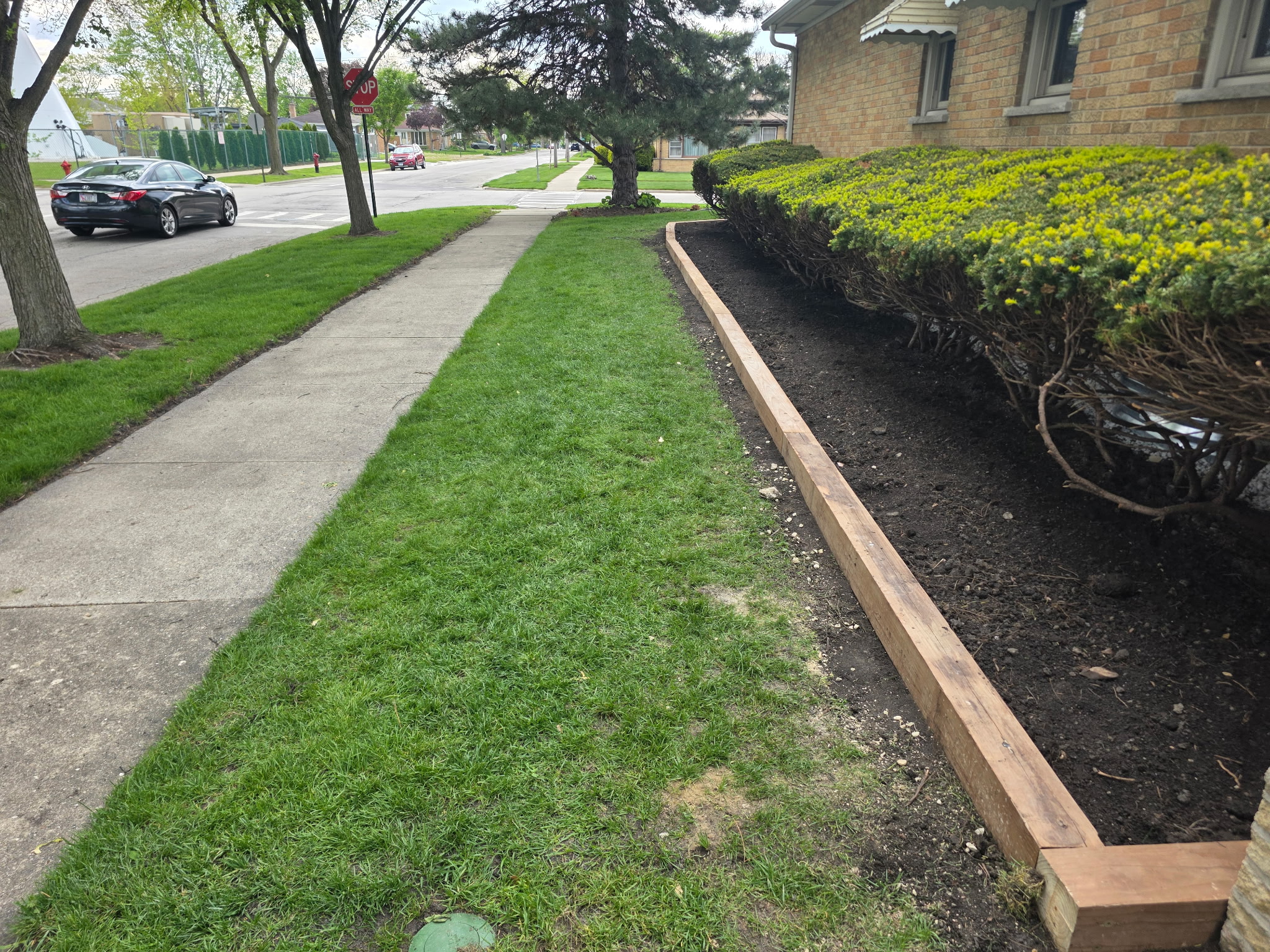
Overview
Chicago's North Shore sits on heavy clay soil. Combined with mature canopy that blocks evaporation, decades of settling around foundations, and roof runoff that hits the same six feet of dirt every storm, standing water and soggy lawns aren't a maintenance issue — they're a drainage engineering problem.
MarioScape handles the three real fixes: French drain installation to move water out, underground downspout extensions to keep roof water away from the foundation, and surface leveling and grading to direct flow where it should go. Most properties benefit from a combination of all three, scoped after a walk-through.
Drainage work means actual trenching, actual perforated pipe in a gravel envelope wrapped in filter fabric. Not surface fixes that look better for a season and fail by the next spring rain. Real installs built to last.
Recent Work
Recent install on the North Shore — French drain plus downspout extension, with timber-edged bed restoration on top.
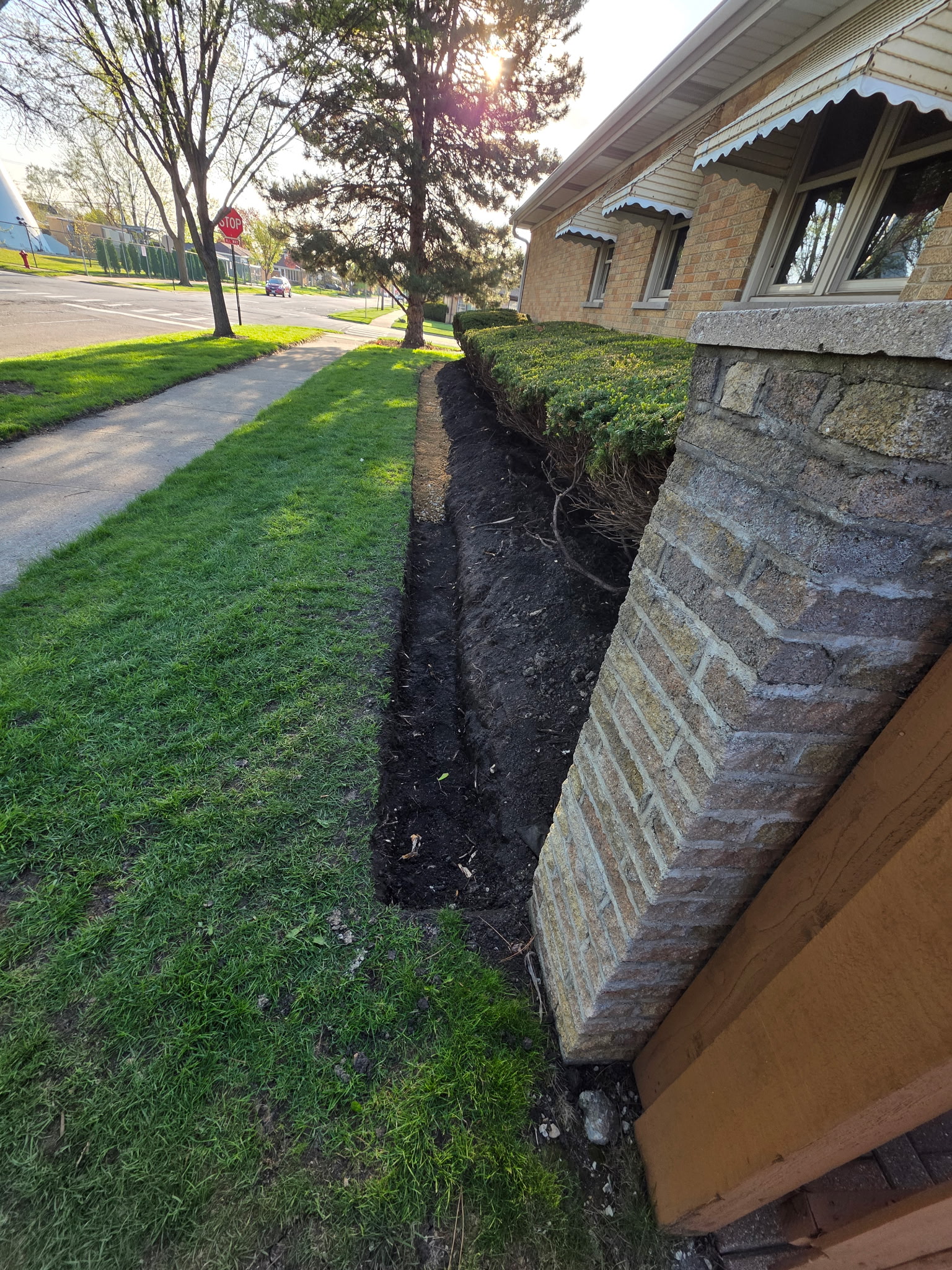
Excavated along the foundation. Six to twelve inch wide trench, sloped to grade, ready for pipe and gravel.
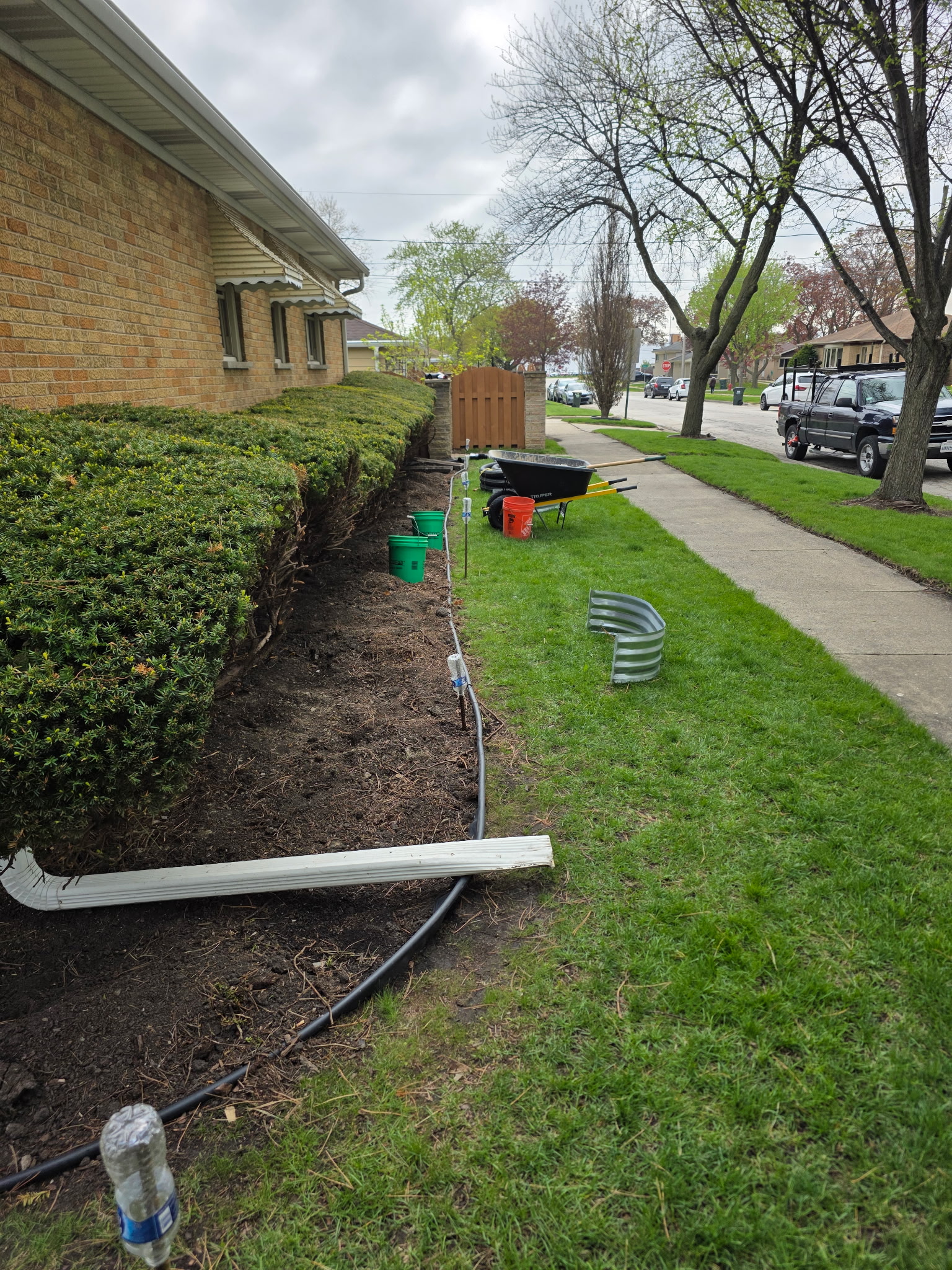
Four-inch perforated French drain pipe and downspout extension materials staged. Pipe gets bedded in gravel, wrapped in filter fabric to keep silt out.
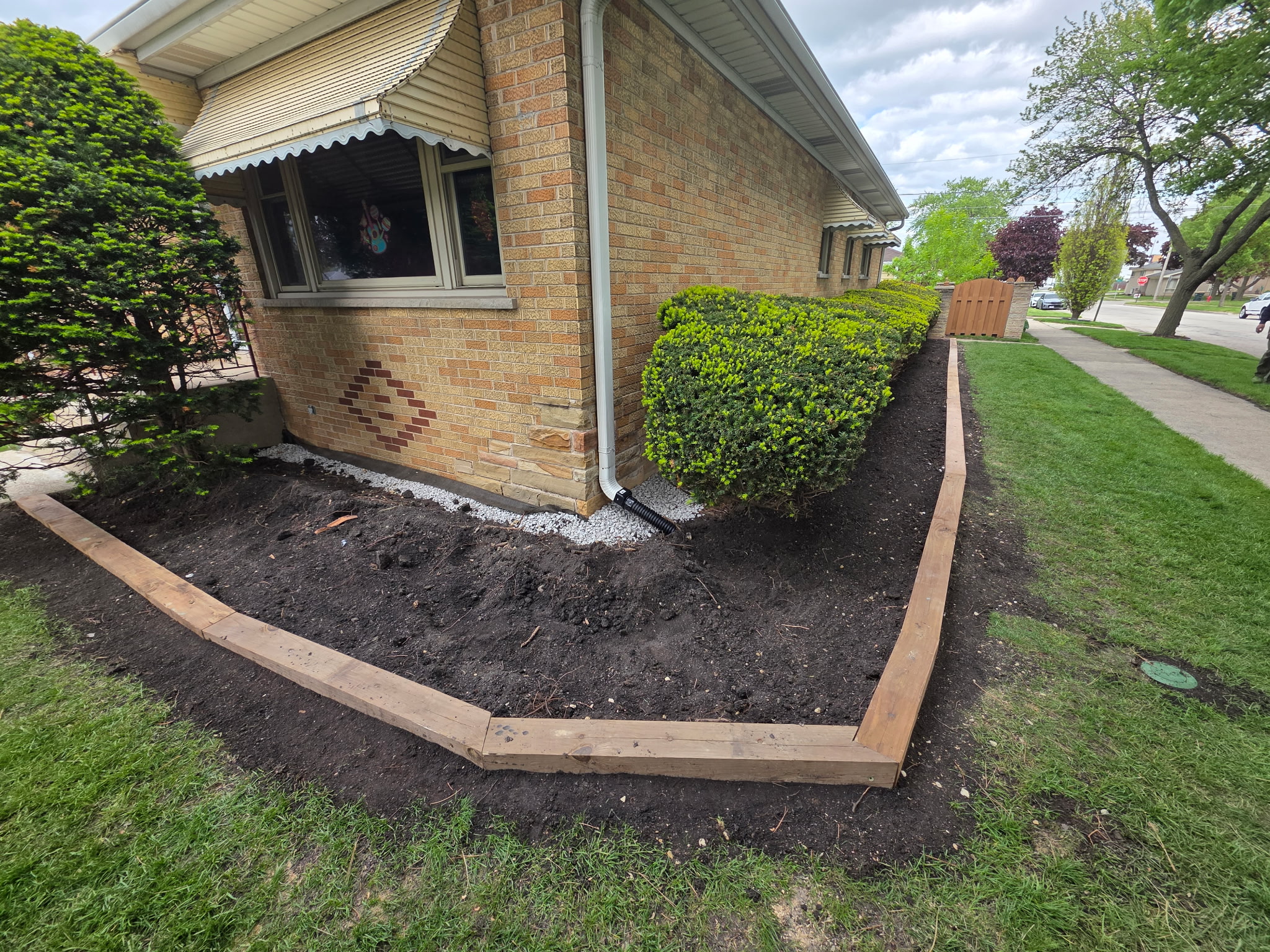
Backfilled, regraded, and topped with timber-edged bed restoration. Pop-up downspout emitter exits through the bed — clean, functional, holds up to North Shore winters.
What's included
Plain English, no padding. Each section starts with a direct answer.
A French drain is a trench filled with gravel and a perforated pipe wrapped in filter fabric — engineered to collect groundwater and move it away from where it's causing problems.
Common applications: persistent wet spots in lawns, foundation seepage zones, low areas that turn into puddles after every rain, and grade-collected runoff that has nowhere to go. Installation runs four-inch perforated pipe in a graded gravel envelope, wrapped in geotextile fabric to prevent silt clogging. Typical residential install ranges from twenty to eighty feet. Built to last when installed correctly.
An underground downspout extension pipes roof water from the gutter system out beyond the foundation — typically six to twenty feet — and releases it through a pop-up emitter.
This is the single most effective fix for basement seepage and saturated foundation soil on North Shore homes. Roof runoff dumped right at the foundation saturates the soil against the wall and finds its way in through micro-cracks. Underground extensions redirect that water far enough that the foundation soil stays dry. Pop-up emitters open under water pressure and stay flush with the lawn otherwise — invisible until they're working.
Surface grading reshapes the ground so water flows where it should — away from foundations, off walkways, and out toward proper drainage points.
Used to fix the upstream side of drainage problems. A property might need a French drain to handle collected water, but if the grade slopes toward the house in the first place, that's where the fix starts. Regrading involves moving soil, recompacting, and matching back into existing lawn or beds. Often paired with French drains and downspout work — drainage problems are rarely a single fix.
Common Questions
Pricing depends on length, depth, and whether trenching needs to navigate around mature trees, sprinkler lines, or hardscape. Reach out for a free walk-through and quote.
Chicago's North Shore sits on heavy clay soil that drains slowly by nature. Combined with mature canopy, low spots, and decades of settling around foundations, standing water is common. The fix is usually a combination: French drain to move water out, downspout extension to keep roof water from compounding the problem, and surface grading to direct flow.
An underground downspout extension pipes roof water from the gutter system out beyond the foundation — typically six to twenty feet — and releases it through a pop-up emitter. This keeps roof runoff from saturating the soil against the foundation, the single biggest cause of basement seepage. Pricing depends on length, access, and number of downspouts.
Trenching creates a temporary disturbance — typically a six to twelve inch wide line. Sod is cut and saved when possible, replaced after backfill. Where sod can't be saved, fresh sod or seed gets installed at completion. Most lawns return to indistinguishable within a season.
Most North Shore villages do not require permits for residential French drains or downspout extensions that stay within the property line and don't connect to municipal storm sewer. Permit requirements are confirmed before quoting — Deerfield, Northbrook, Highland Park, and Evanston each have slightly different rules.
A properly installed French drain is built to last for years. Short-lived drains usually fail because of skipped fabric (silt clogs the pipe) or undersized pipe. Installations use four-inch perforated pipe in a graded gravel bed wrapped in filter fabric.
Service Area
Primary service area below. Drainage jobs typically book one to three weeks out — sooner for emergency situations like active basement seepage.
Tell me what's happening — standing water, basement seepage, soggy lawn — and I'll come walk the property to scope the right fix.
