Landscape Installation
The build-out work that turns a property from maintained to finished. Mulch refreshes, sod installs, decorative stone, stepping-stone walkways, raised garden beds, and plant installations that actually survive North Shore winters.
Overview
Installation work on Chicago's North Shore has to survive five-month winters, freeze-thaw cycles, heavy clay soil, and the foot traffic of mature neighborhoods. Most landscaping that fails in zone 5b fails at the prep stage — wrong base under a walkway, mulch piled against trunks, plants chosen from a Sun Belt catalog that won't survive January.
MarioScape handles the full installation menu: soil amendments, mulch installation, sod, planting installations, decorative stone, stepping-stone walkways, and raised garden beds. Materials are sourced from regional suppliers used to North Shore winters — not the cheapest big-box pallet that splits in two years.
Plants chosen for Deerfield, Northbrook, Highland Park, and Evanston yards are matched to actual conditions: clay drainage, sun exposure under mature canopy, deer pressure where present, and zone 5b winter hardiness. Plant guarantees depend on the variety and where it's sourced — ask what's covered on the plants you choose.
What's included
Plain English, no padding. Each section starts with a direct answer.
Soil amendments fix what's underneath before anything new goes on top — compost, organic matter, sand for drainage, or pH correction for North Shore's heavy clay.
Most installation problems in this region trace back to clay soil compaction and drainage. A bed that gets fresh mulch every year but never gets the soil amended underneath stays heavy, holds water, and slowly chokes plant roots. Amendments are quoted as part of bigger installation projects — rarely as a standalone — and tailored to whatever's getting installed on top.
Mulch installation refreshes existing beds with two to three inches of clean hardwood — the depth that suppresses weeds, holds moisture, and doesn't choke root crowns.
Bed prep comes first: pulling weeds, edging the bed lines, removing matted old mulch when depth is wrong. Mulch is then installed at the correct depth (not piled against trunks — those "mulch volcanoes" cause real damage). Hardwood is standard; dyed mulch and premium options available. Most North Shore yards need three to eight cubic yards for a full refresh.
Sod gives an instant lawn for front yards, pet-traffic areas, or bare patches that need to be green by the weekend.
Bed prep matters: existing surface needs to be cleared, leveled, and the soil loosened so new sod roots actually take. Sod is laid in staggered seams, rolled to remove air pockets, and a watering schedule comes with the install. Sod installation runs from April through about mid-October on the North Shore. Seam visibility fades in two to three weeks with proper watering.
Plantings get chosen for zone 5b survival first, aesthetics second — hostas, ferns, hydrangea, yews, boxwood, and perennials that come back every year on the North Shore.
Site assessment first: sun exposure, soil drainage, deer pressure, mature canopy shade. Plants matched to actual conditions, not a stock garden photo. Trees and shrubs get root-ball checked, soil amended at the planting hole, mulched correctly. Perennials installed in groupings that read as designed, not scattered. Guarantee coverage varies by plant and source — ask what applies to your install.
Decorative stone (river rock, gravel, accent stones) replaces mulch in dry-foundation zones, drainage exits, or low-maintenance bed areas where annual refresh isn't wanted.
Common applications: stone aprons along foundations to handle water runoff, gravel paths through side yards, decorative river rock in beds under downspouts. Landscape fabric goes underneath to suppress weeds. Stone choices match house style — washed river rock for traditional, crushed bluestone for modern. Edging keeps stone contained at bed lines.
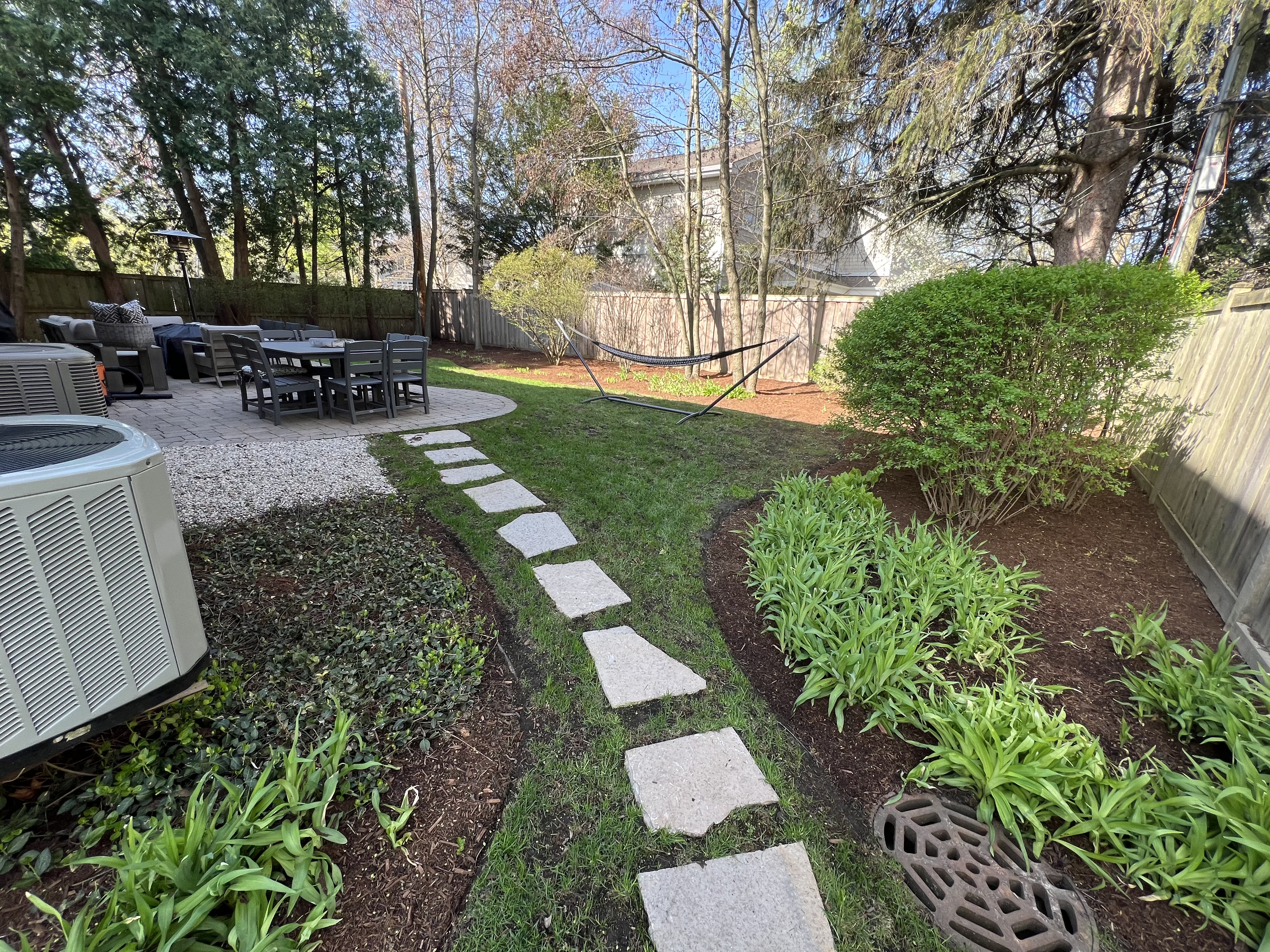
Stepping-stone walkways use natural flagstone, bluestone, or pre-cast pavers — but the part that matters most isn't the stone, it's the base underneath.
Proper base prep: excavation to six inches, gravel base, polymeric sand or stone dust for setting, leveling for water runoff. Skip the base and frost-heave will tilt every stone within two winters. Installations matched to surrounding plantings and house style. Front-walk stepping paths, side-yard connectors, garden meanderers — all sized to walking stride and grade.
Raised garden beds get built from rot-resistant cedar or composite timber, sized to the space, and filled with the right soil mix for whatever's being grown.
Vegetable beds get a different mix than perennial beds — vegetables need more compost and drainage, perennials need amended native soil. Standard 4x8 and 4x12 builds quoted on the spot; custom sizes (corner-fit, L-shape, terraced for slope) quoted after a walk-through. Beds typically last eight to twelve years with cedar, fifteen-plus with composite. Drip irrigation optional and recommended for vegetable beds.
Common Questions
Pricing depends on bed prep needed, mulch type, and access. Most residential properties need three to eight yards for a full refresh. Estimates include delivery, edging, and installation. Reach out for a quote on your specific job.
Sod gives an instant lawn and goes down from April through mid-October on the North Shore. Seed is cheaper but takes weeks to establish and works best from late August through early October. For high-visibility front yards, pet traffic, or quick turnaround, sod wins.
Chicago's North Shore sits in USDA zone 5b — hostas, ferns, astilbe, heuchera, brunnera, and Japanese forest grass thrive under mature canopy. For shrubs: yews, boxwood, hydrangea (oakleaf and panicle varieties), and viburnum handle shade and freeze cycles. Avoid sun-loving Mediterranean plants common in stock garden photos — they don't survive zone 5b winters.
Two to three inches is the sweet spot. Less than two and it doesn't suppress weeds or hold moisture. More than three and water can't penetrate properly, and "mulch volcanoes" piled against trunks invite rot. Mulch refresh, not full replacement, every spring keeps depth correct.
Yes. Raised garden beds are built from rot-resistant cedar or composite timber, sized to fit the space, and filled with a soil and compost mix appropriate for whatever's being grown. Typical builds are 4x8 or 4x12, with custom sizes available.
Stepping stone walkways use natural flagstone, bluestone, or pre-cast decorative pavers depending on style and budget. Base prep matters more than the stone itself — proper excavation and gravel base prevent frost-heave issues that destroy walkways through Chicago winters.
It depends on the plant and where it's sourced — some carry a replacement guarantee, some don't. Ask what's covered for the plants you pick and I'll be straight about it. Either way, watering compliance is the owner's responsibility (a watering schedule comes with the install).
Service Area
Primary service area below. Installation jobs typically book two to four weeks out — sooner for smaller scope, longer for full bed redesigns.
Tell me about your project — beds, walkways, sod, plantings — and I'll come walk the property for a written estimate.
