Sod Installation
Full sod lawns and patch repairs across the North Shore — old turf stripped, clay soil graded and amended, Kentucky bluegrass sod laid tight and rolled. Owner on every job, and a watering plan so it actually roots.
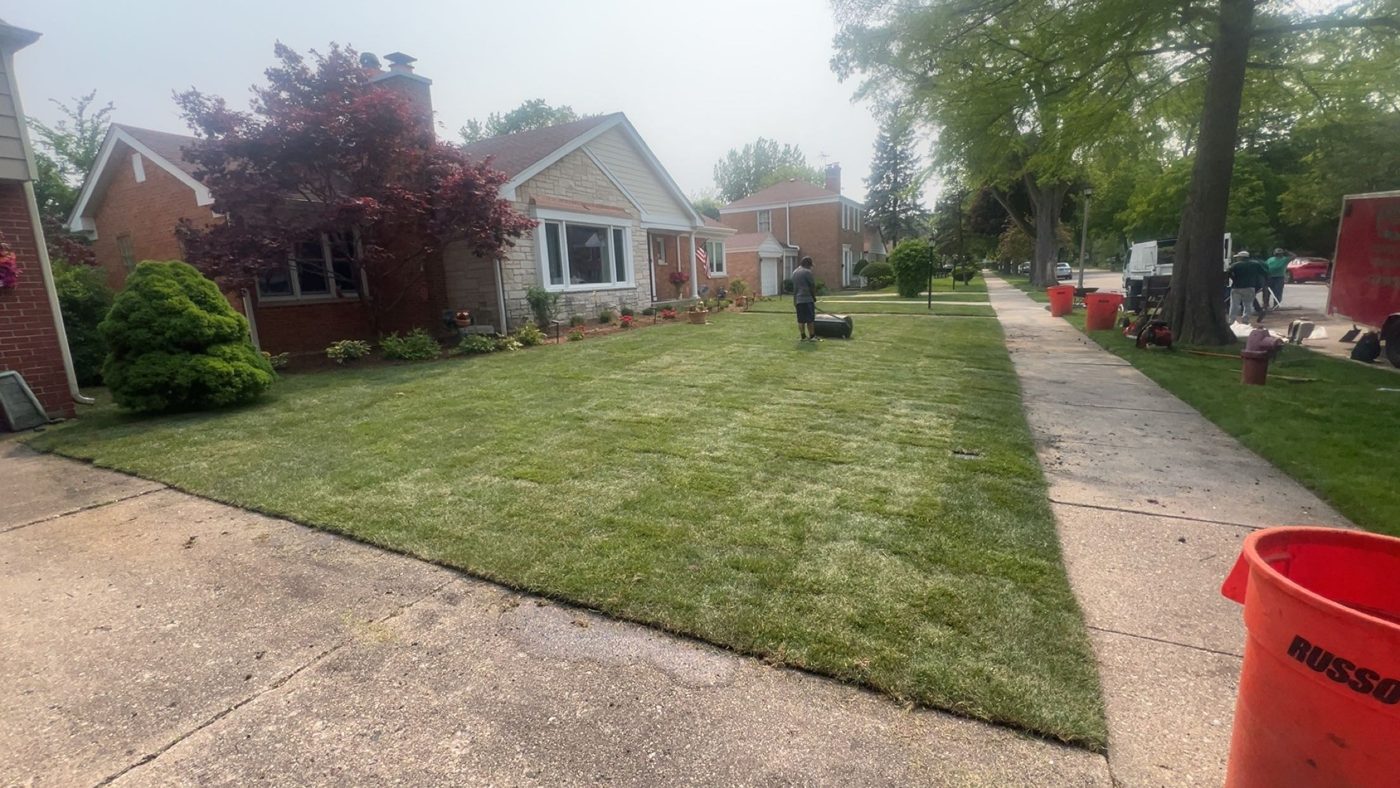
Overview
Anyone can unroll sod. What decides whether it roots or dies is what happened before the first roll went down: whether the old lawn was stripped instead of buried, whether the clay got loosened and amended, whether the grade sends water away from the house, and whether the soil was firm and flush with the walks so the seams don't lift.
North Shore yards are mostly heavy clay, so prep is where the time goes. I till four to six inches, work in compost or quality topsoil to get at least four inches of real root zone, fix low spots and drainage while the ground is open, and never work the clay when it's wet — that wrecks the structure for years. Then the sod goes down like brickwork: staggered seams, butted tight, never stretched, rolled to press out air pockets, and watered within the hour.
Sod installs through most of the growing season, but fall is the best time for Kentucky bluegrass here — warm soil, cool nights, and roots set before winter. Spring works too; midsummer heat is the one window to avoid. And if all you need is the dead patch by the driveway fixed, patch repairs get the same prep and the same sod.
What's included
Plain English, no padding. Each section starts with a direct answer.
The old lawn comes out — never buried — and the soil gets tilled, amended, and graded before a single roll arrives.
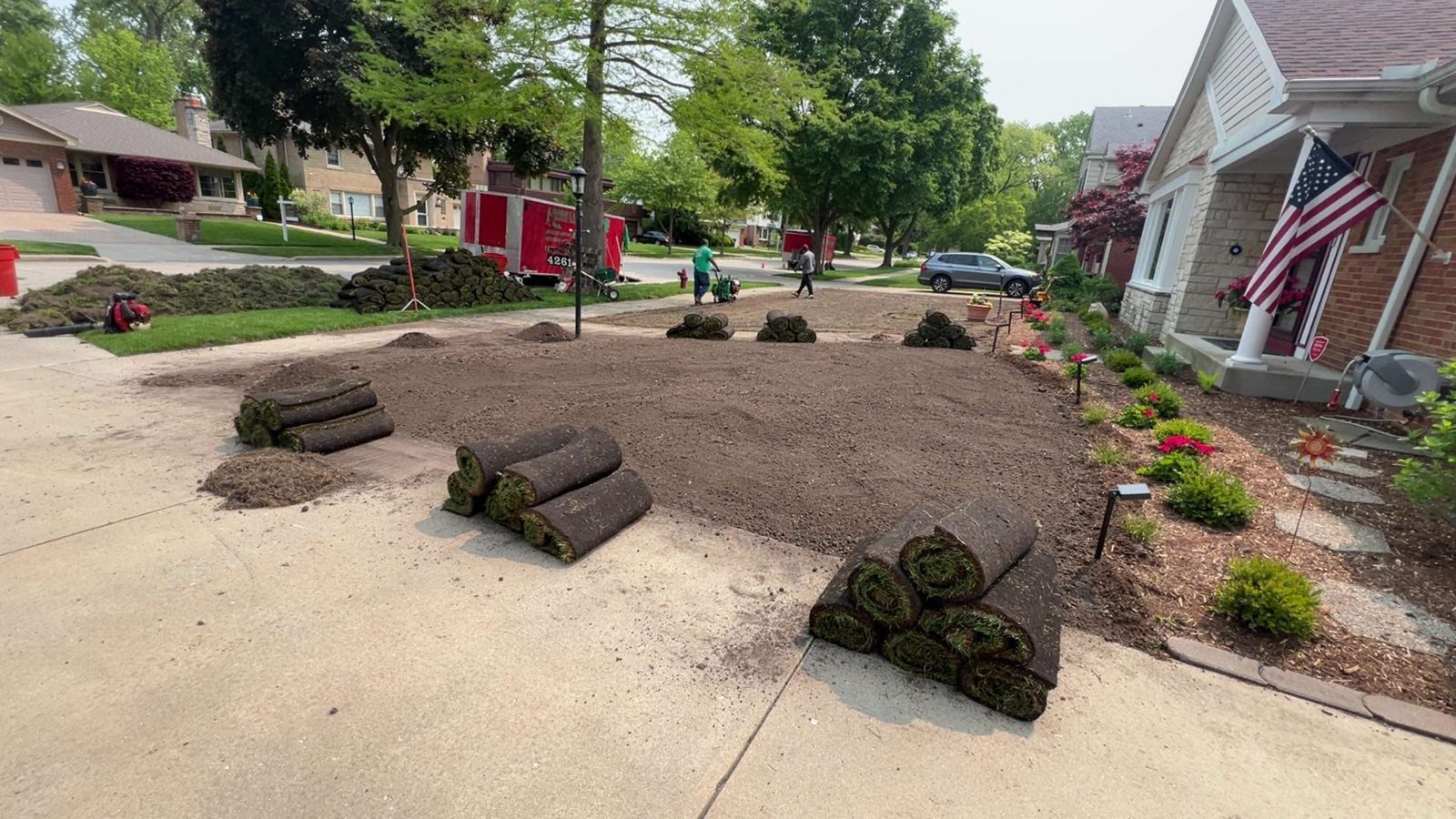
Sod laid over existing grass or hard clay won't root. Old turf is cut and hauled away, the bed tilled four to six inches, compost or topsoil worked in on clay, and the grade set so water runs away from the foundation. Low spots and drainage problems get fixed now, while it's cheap to do. The finished bed is firm enough that a footprint sinks less than half an inch, and sits about half an inch below walks and driveways so the sod ends up flush.
Fresh-cut Kentucky bluegrass sod from Lurvey's, laid the day it's delivered, staggered like bricks, seams tight, then rolled.
Rolls go down within hours of cutting — sod that sits on a pallet in the heat is already dying. Pieces are staggered so seams don't line up, butted edge to edge without stretching, and slivers under about nine inches are avoided because they dry out. Along walks the edge is trenched slightly so roots aren't exposed. A lawn roller presses the roots into the soil and removes air pockets, and the first inch of water goes on within the hour.
Daily morning watering — sometimes twice a day in heat — until the sod passes the tug test, usually 10 to 14 days.
You'll get a written schedule before I leave. The soil under the sod needs to stay moist three to four inches down; lack of water is the number one reason new sod fails. Around day 10 to 14, tug a corner — if it resists, it's rooted, and you shift to deeper, less frequent watering. Keep everyone off it for the first two weeks; normal use with kids and dogs usually resumes at three to four weeks.
First mow when it reaches three to four inches, a little higher than normal, with a sharp blade — and never more than a third off.
Then hold it at two-and-a-half to three inches. A follow-up feeding about a month after install helps it knit in, and once it's firmly rooted, a fall core aeration keeps the farm soil and your clay from settling into two separate layers. If you're on my route, I'll tell you when that's due.
Dead spots from dog damage, a construction path, a drainage fix, or a dying tree get the same prep and the same sod — just at the size you need.
Patches are cut square, the dead turf and a couple of inches of soil removed, fresh soil worked in, and new sod fitted flush. The color takes a few weeks to blend with the existing lawn. Usually a same-day job, and a good way to fix the front yard before a sale or a party.
Real Jobs
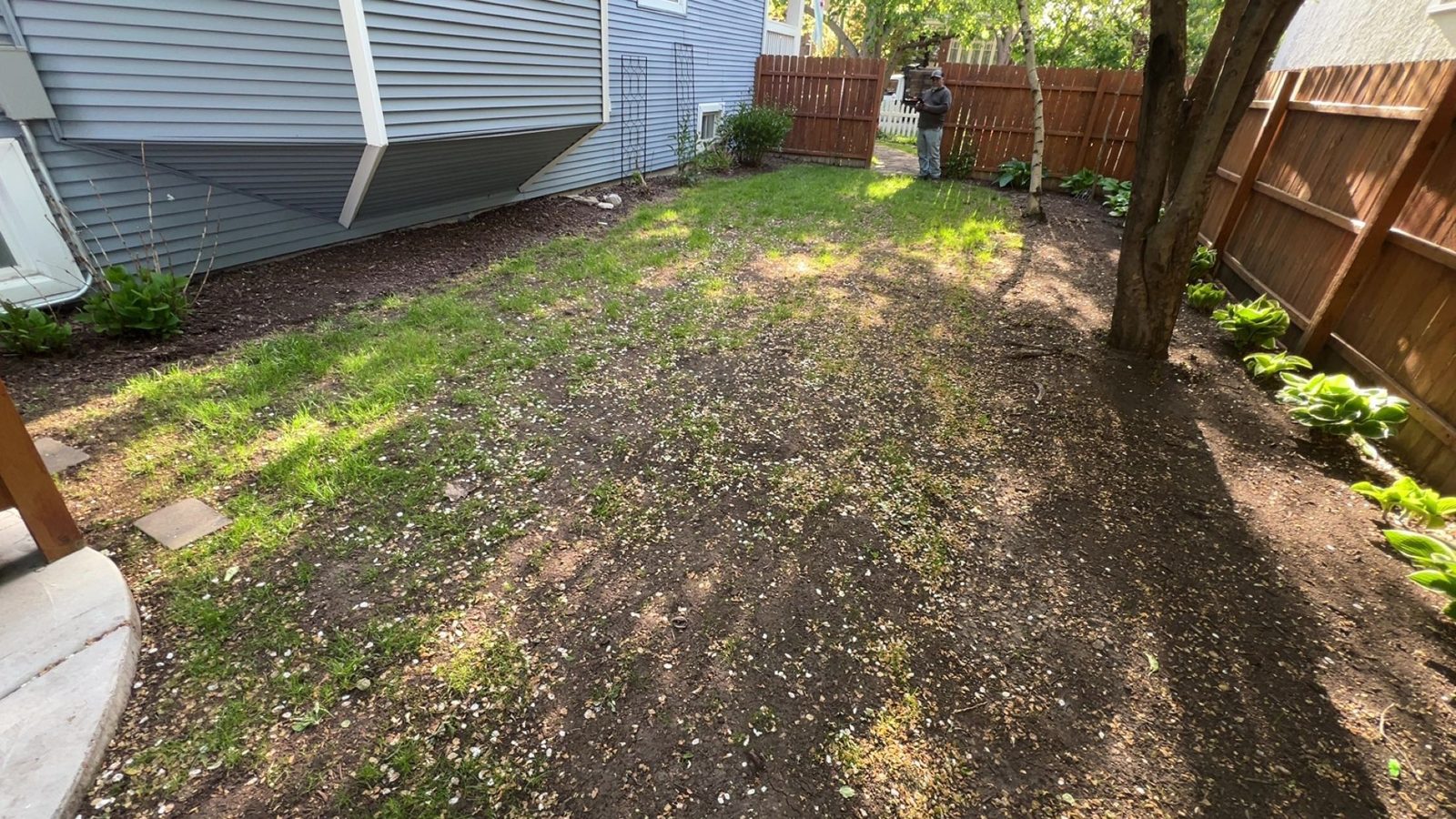
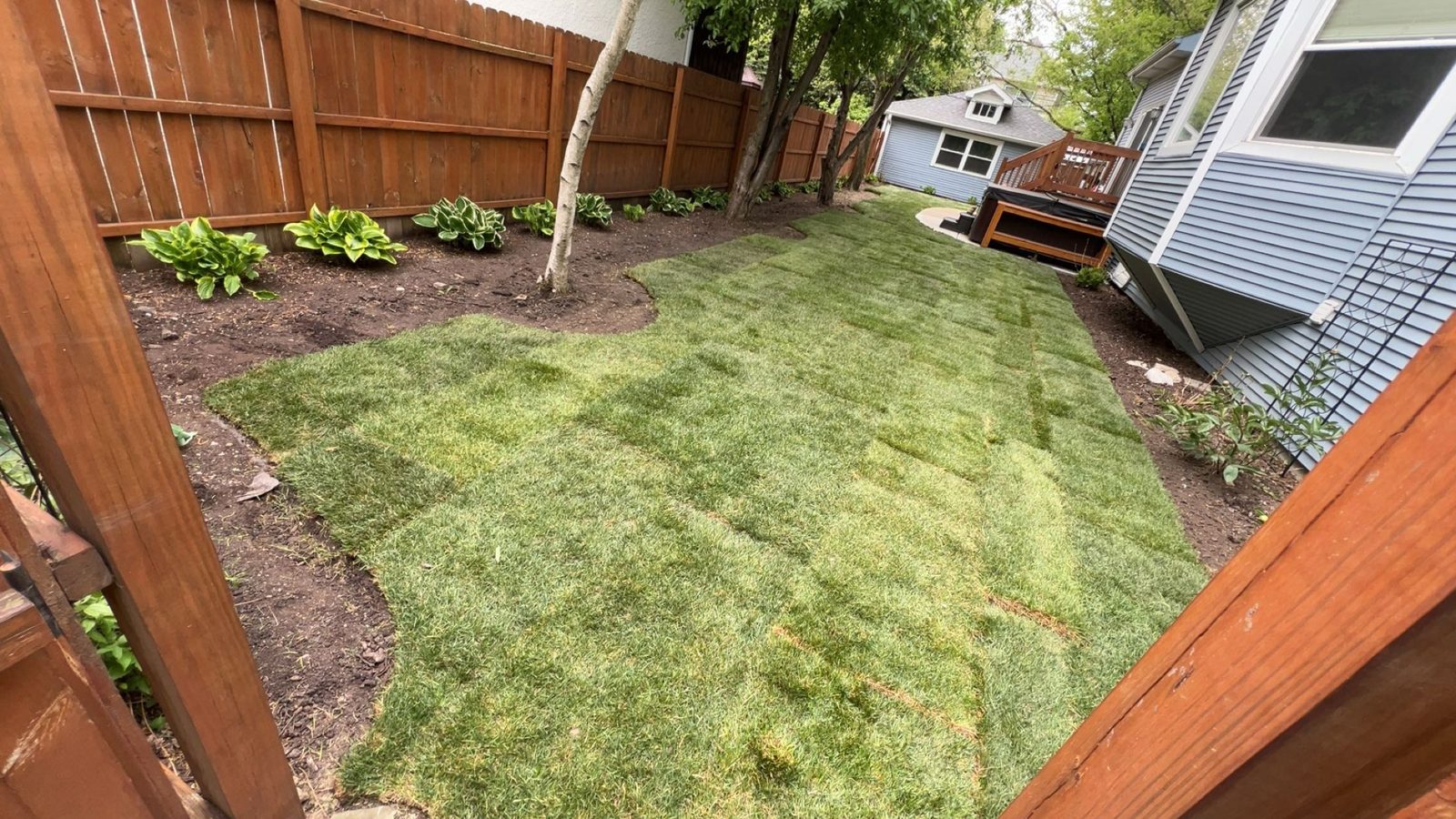
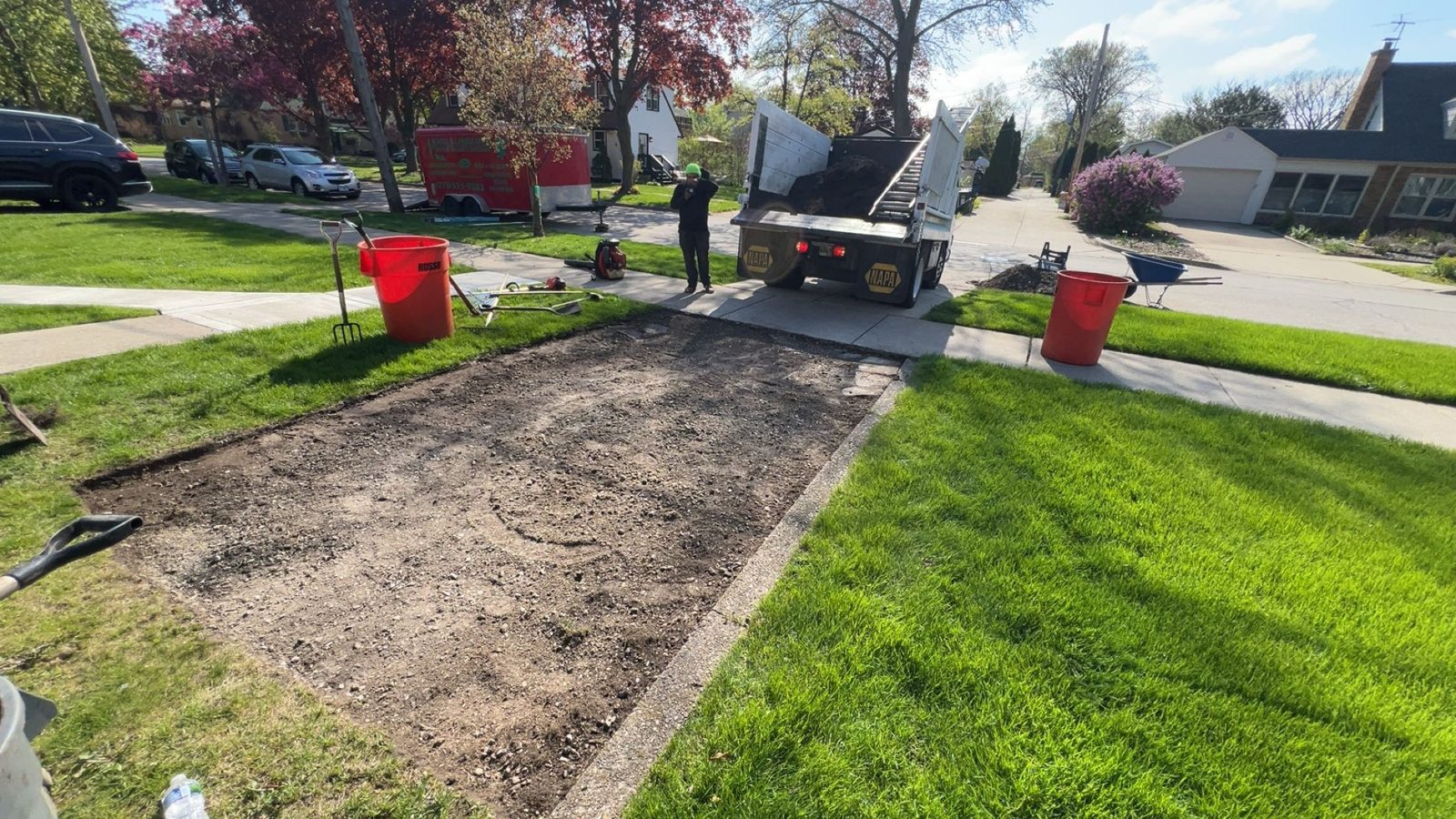
Our own photos, not stock. Same prep on every yard: old lawn out, clay amended, graded, laid tight, rolled, watered in.
Common Questions
Stay off it for about two weeks while it roots. Once it passes the tug test — usually 10 to 14 days in good weather, longer in late fall — light use is fine, and normal use with kids and dogs at three to four weeks.
Sod gives you a usable lawn in about three weeks, holds soil on slopes, and installs most of the growing season with far fewer weeds. Seed costs less in materials, but Kentucky bluegrass is slow, needs the tight mid-August-to-mid-September window, and means months of watering and hand-weeding with an unusable yard. For a front yard or a family backyard, sod usually wins. For a big back area on a budget, fall seeding can make sense — I'll tell you which.
Mid-October is about the latest I'll lay sod. After that the temperatures drop too much for it to root well before winter. Early fall is the best window, and midsummer heat is the one to avoid.
No, and don't let anyone do it. The old turf has to come out; sod on top of grass or hard clay just sits there and dies. Stripping and prep is most of the work — and most of the reason a good install takes the time it does.
Usually some. The goal is at least four inches of real root zone: the existing clay tilled and amended with compost or good topsoil so roots and water can move. I'll tell you how much after I see the yard.
Almost always water — dry soil under the sod, or seams that were stretched and shrank. Check moisture three to four inches down and water more. If someone else installed it and the edges have curled, call me and I'll take a look.
Square footage, whether the old lawn has to be stripped and hauled, how much grading and drainage work the yard needs, how much topsoil or compost the clay calls for, access (a fenced backyard means every roll gets carried), and how much cutting an odd-shaped yard takes. Send me the address and I'll measure it and send a written quote.
Service Area
Spring and early fall are the best windows — fall books fast.
Send me your address and a photo of the yard. I'll measure, tell you what the soil needs, and send a written quote.
