Lawn Care & Regular Maintenance
The recurring work that keeps a North Shore lawn green through July, thick through August, and clean through fall. Mario is an Illinois Commercial Applicator licensed in General Standards and Turf — chemical work in the lawn is handled directly, not subcontracted.
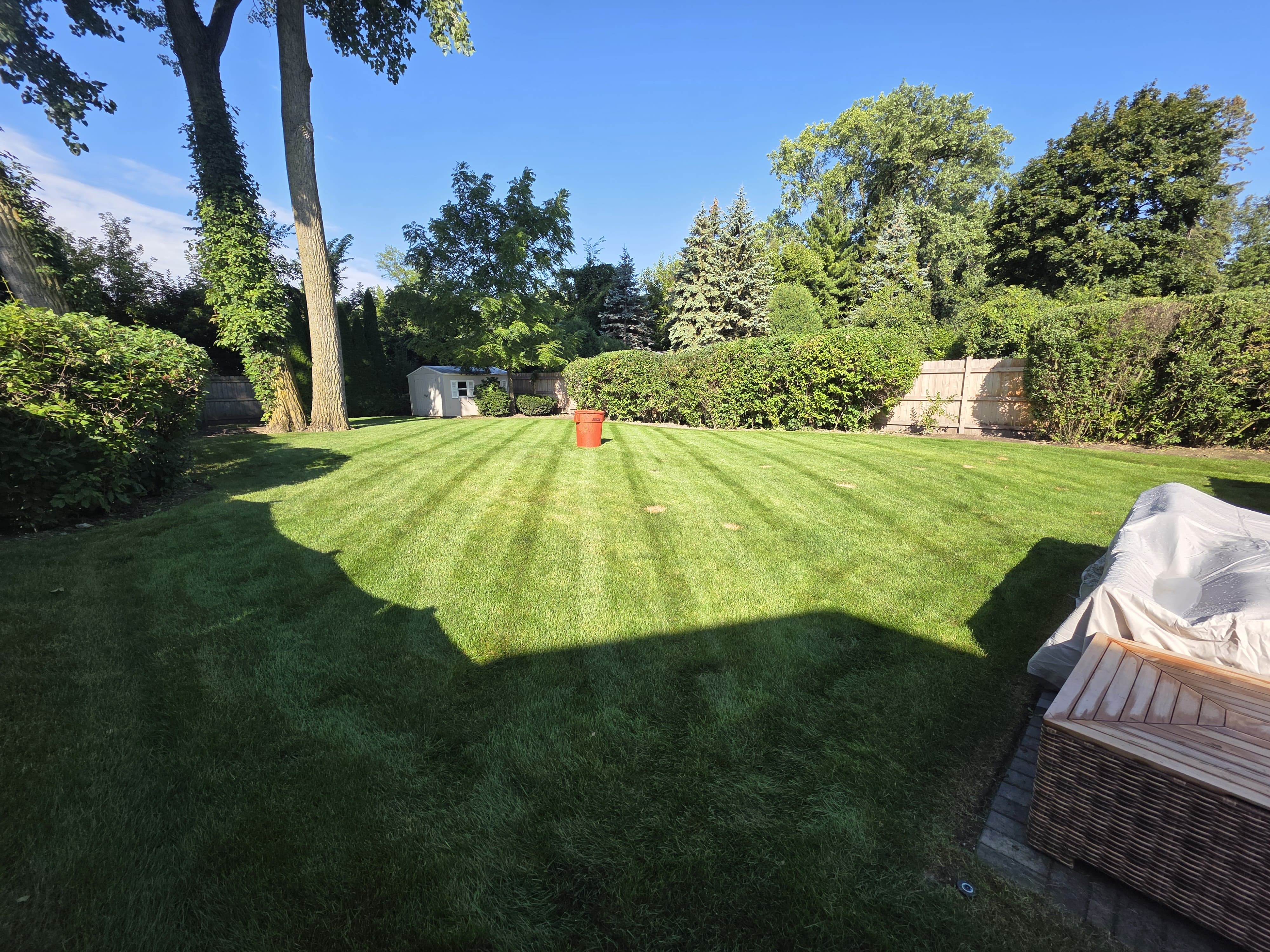
Overview
Lawn care in Deerfield, Northbrook, Highland Park, and Evanston means working with cool-season grasses on heavy clay soil under mature canopy. It's a different game than a sunny Sun Belt lawn — the priorities are consistent mowing height, smart fertilizer timing, and weed pressure management without burning the turf.
MarioScape handles the full recurring program: weekly mowing, biweekly mowing, fertilizing, broadleaf weed spraying in turf, hand weeding, and overseeding. Turf pesticide applications are handled under Mario's Illinois Commercial Applicator license, which lists General Standards and Turf.
Most North Shore properties land somewhere between a weekly mow with a four-step fertilizer program and a biweekly mow with spot weed treatment. The right plan depends on lot size, sun exposure, soil drainage, and whether you've got an HOA spec to hit. Estimates are free and done in person, not by square-foot calculator.
What's included
Plain English, no padding. Each section starts with a direct answer.
Weekly mowing keeps a North Shore lawn at a consistent 3 to 3.5 inch height during peak growing season — the height that shades out crabgrass and crowds out broadleaf weeds without scalping the crown.
Cuts run on a fixed day of the week so the schedule is predictable. Blades stay sharp (sharpened in the off-season), mowing direction alternates each week to prevent rutting, and clippings are mulched back into the lawn for nitrogen unless they're heavy enough to clump. Trimming and edging are included on every visit. Most Deerfield, Northbrook, and Highland Park lawns benefit from weekly mowing May through August, with biweekly mowing fine for shoulder months.
Biweekly mowing fits slower-growing lawns, heavily shaded yards, or properties where a smaller budget rules out weekly service.
Works best for shoulder-season periods (early spring and mid-fall) or for shaded backyards under mature North Shore canopy where grass simply grows less. The trade-off: during heavy May–June growth, biweekly mowing means cutting more than a third of the blade height in a single pass, which stresses the turf. For homeowners on biweekly schedules, weekly upgrades during peak weeks are available.
A North Shore fertilizing program runs four to five applications between April and October, timed to zone 5b growth cycles — not a calendar shipped from out of state.
Early spring feed wakes the lawn up. Late spring builds density and feeds before summer heat. Summer slow-release prevents burn during drought stress. Fall recovery rebuilds root mass after the season. Late-fall winterizer (timed to soil temperature, not the calendar) protects through the freeze. Fertilizer timing is coordinated with weed control so the products don't fight each other.
Broadleaf weed spraying targets dandelion, clover, plantain, creeping charlie, and the rest of the usual North Shore lawn weeds with selective herbicide — meaning it kills the weeds without killing the grass.
Applied as spot treatment for light pressure or blanket treatment when the lawn needs a reset. Timing matters: spring and fall applications work better than summer ones, when heat stress can amplify any product impact. Mario is an Illinois Commercial Applicator licensed in General Standards and Turf, with product selection appropriate to the season and pet/kid access timelines clearly communicated up front.
Hand weeding handles planting beds, mulch zones, gravel paths, and the in-between spots where chemical application isn't appropriate.
Pulled by root, not chopped off at soil line. Done as a mid-season touch-up between spring and fall cleanups for homeowners who want bed edges clean without herbicide near vegetable gardens, ornamental plantings, or kids' play areas. Common add-on to recurring mow accounts during the May–July window when bed weeds compete with new mulch.
Overseeding works best on the North Shore from late August through early October, when soil is still warm but air temperatures have dropped — the window that gets the highest germination rate.
Cool-season blends (turf-type tall fescue, Kentucky bluegrass, fine fescue) get matched to sun exposure on each lawn. Slit-seeding or core-aeration-plus-seed prep for thin areas; broadcast overseeding for general thickening. Germinates in two to three weeks with proper watering. Spring seeding is available when fall isn't possible but it's the fallback, not the preferred window.
Common Questions
Pricing depends on lot size, slope, access, and which services you need (mowing only versus mowing plus fertilizing, weed control, seeding). Every estimate is free and given after walking the property — no square-foot calculator pricing. Reach out for a quote on your specific property.
Most cool-season lawns on Chicago's North Shore should be mowed weekly from late April through mid-October during peak growing season. Biweekly mowing works for slower-growing or shaded lawns, and during the shoulder months when grass slows down. Mowing too short or skipping cuts during heavy growth weakens the turf and invites weeds.
Weekly mowing keeps grass at a consistent height during peak growth and protects against crabgrass and broadleaf weed pressure. Biweekly mowing is appropriate for slower lawns, shadier yards, or shoulder-season periods. Most North Shore properties get better results from weekly cuts during May through August.
On Chicago's North Shore (USDA zone 5b), a balanced fertilizing program runs four to five applications between April and October: early spring feed, late spring weed-and-feed, summer slow-release, fall recovery, and a late-fall winterizer. Timing matters more than product — a winterizer applied too early or a summer feed during drought stress can do more harm than good.
Yes. Mario is an Illinois Commercial Applicator licensed in General Standards and Turf. Broadleaf herbicide applications are handled directly on turf rather than subcontracted.
Yes. Overseeding works best on the North Shore from late August through early October, when soil temperatures are still warm but air temperatures have cooled. Cool-season blends germinate in two to three weeks with proper watering. Spring seeding is a fallback when fall isn't possible.
Service Area
Primary service area below. Recurring mow routes are most efficient when neighbors share days — group bookings on the same street usually qualify for friendlier pricing.
Tell me about your lawn and I'll send back a written quote — usually within 24 hours. No pressure, no sales pitch.
